Complete Guide to best ai writing tools

📋Table of Contents
Title: 10 Best AI Writing Tools for 2025 (Ranked & Reviewed)
Introduction
Let’s be real for a second—the content landscape has completely changed. Just a few years ago, using AI to write was a novelty. Today, industry reports show that AI writing tools power 40-50% of all digital content workflows. It is no longer a question of if you should use AI, but which tool deserves a spot in your tech stack.
The problem? The market has exploded to a staggering $2.1B in 2025. There are hundreds of options promising to write your next viral blog post or bestseller. But how do you separate the "hallucinating" bots that make up facts from the enterprise-grade assistants that actually drive revenue?
We’ve done the heavy lifting for you. We analyzed the top contenders based on current G2 ratings, 2025 market data, and real-world performance to bring you a definitive list of the best AI writing tools. Whether you need SEO-optimized articles, clean code, or persuasive ad copy, we’ve found the right fit for you.
What You’ll Learn:
- A breakdown of the top 10 tools for 2025.
- Pricing models (from free tiers to enterprise).
- Which tool fits your specific niche (Marketing, Fiction, SEO, or Coding).
1. How We Ranked These Tools (Our Criteria)
To ensure this list is actually useful, we didn't just look at who has the flashiest website. We ranked these tools based on four critical factors:
- Output Quality & Accuracy: We looked at the Reuters Institute standard, specifically measuring readability against the risk of hallucinations. Does it sound human, or does it sound like a robot trying to be human?
- Feature Set: We looked beyond basic text generation. Does the tool offer Multimodal support (images/video)? Does it have Agentic AI capabilities?
- User Experience: How easy is it to integrate into your workflow? We favored tools that play nice with Google Workspace, Notion, or coding environments.
- Value for Money: We compared free tiers against enterprise costs to see which tools offer the best bang for your buck.
2. Top 10 Best AI Writing Tools in 2025
1. Jasper.ai – Best for Enterprise Marketing
Overview: Jasper remains the heavy hitter for marketing teams and agencies. While other tools are generalists, Jasper is purpose-built for performance marketing. It focuses heavily on brand voice training and campaign workflows, ensuring your content doesn't just sound good—it converts.
Key Features:
- Brand Voice: Upload your style guide and past content to train Jasper on your specific tone.
- Campaign Workflows: Create end-to-end campaigns (emails, ads, blog posts) in one shot.
- SEO Integration: Native integration with SurferSEO.
Pros:
- Users report producing 10x more content per week.
- High user satisfaction with a 4.6/5 G2 rating.
- Excellent for long-form marketing copy that stays on brand.
Cons:
- Higher price point compared to generic tools.
- Steeper learning curve due to the sheer number of features.
Pricing: Starts at $49/mo.
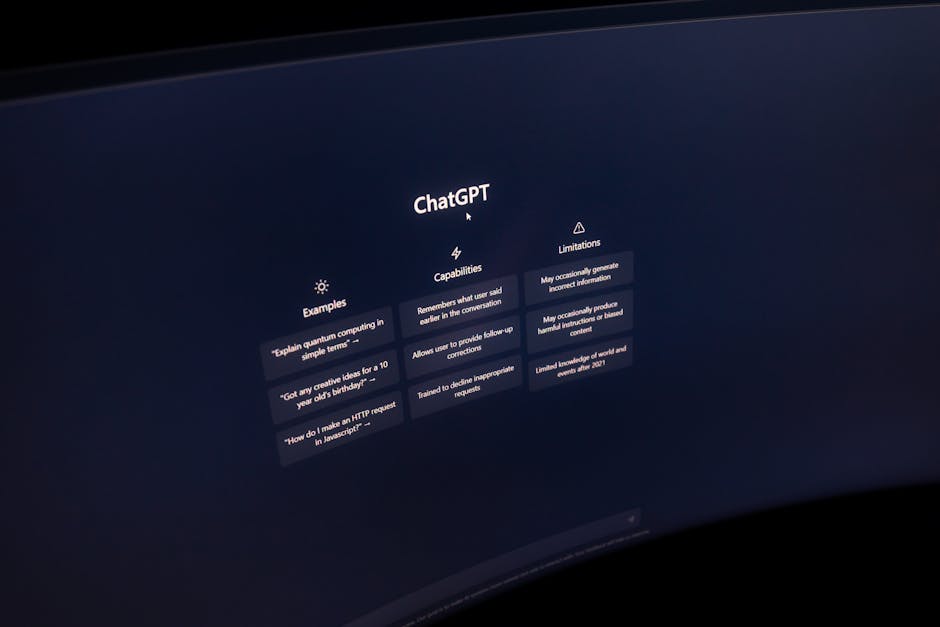
2. ChatGPT (OpenAI) – Best Versatile All-Rounder
Overview: The tool that started the revolution is still the king of versatility. With 400M weekly users, ChatGPT is the go-to for ideation, drafting, and general assistance. With the release of the o1 model, its reasoning capabilities have skyrocketed.
Key Features:
- Canvas: A new interface designed specifically for writing and coding projects, allowing for iterative editing side-by-side.
- Custom GPTs: Create mini-versions of ChatGPT tailored to specific tasks.
- Multimodal: Understands and generates text, images, and voice.
Pros:
- Unmatched versatility for almost any topic.
- Massive knowledge base.
- The "Canvas" feature makes collaborative editing significantly easier.
Cons:
- Can suffer from generic "AI voice" (clichés) without detailed prompting.
- Privacy concerns for enterprise data on lower tiers.
Pricing: Free; Plus at $20/mo.
3. Claude (Anthropic) – Best for Natural Tone & Coding
Overview: If you find ChatGPT too robotic, Claude is your answer. Known for its massive context window (200k tokens) and "human" nuance, Claude 3.5 Sonnet is widely considered the best model for creative writing and coding tasks.
Key Features:
- Artifacts: A dedicated window to view code, documents, or website previews side-by-side with your chat.
- Project Context: Upload entire books or codebases for context-aware answers.
Pros:
- Highest rated for creative writing nuance and readability.
- Less prone to "AI-speak" clichés like "delve" or "tapestry."
- Handles massive documents easily.
Cons:
- Fewer direct marketing templates than Jasper.
- Slower generation speed compared to GPT-4o.
Expert Tip for Developers: While Claude is excellent for coding, managing context in large projects can still be tricky. If you are using AI for heavy coding workflows, check out grebMCP. It’s an ultra-fast context engine that works with your IDE to understand your codebase without the slow indexing time, making it a perfect companion to AI coding assistants.
Pricing: Free; Pro at $20/mo.
4. Grammarly – Best for Editing & Polish
Overview: Grammarly isn't just a spellchecker anymore; it’s a full-fledged AI writing partner used by 30M+ people daily. It focuses on refining what you've already written rather than generating net-new content from scratch.
Key Features:
- Tone Detection: Tells you if you sound confident, friendly, or aggressive.
- Full-Sentence Rewrites: Fixes clunky syntax instantly.
- Enterprise Security: Best-in-class data privacy.
Pros:
- Reduces editing time by 45% according to enterprise reports.
- Works everywhere you write (browser, desktop, mobile, email).
- Best-in-class error detection.
Cons:
- Generative features are less robust than specialized tools like Jasper.
- Can be overly prescriptive with style.
Pricing: Robust Free version; Premium $12/user.
5. Writesonic – Best for SEO & Real-Time Data
Overview: A favorite for bloggers and e-commerce owners, Writesonic is built to rank. It leverages GPT-4o but adds a layer of SEO intelligence and real-time web access to ensure your content is factual and optimized.
Key Features:
- Article Writer 6.0: Writes factual articles with real-time citations.
- Shopify Integration: profound for e-commerce product descriptions.
- SEO Scoring: Built-in grading for your content.
Pros:
- Great for product descriptions (users see a 22% conversion lift).
- Integrates image generation within the article builder.
- Strong focus on ranking factors.
Cons:
- The credit-based system can be confusing for heavy users.
- The UI can feel a bit cluttered compared to minimalist tools.
Pricing: Starts at $16/mo.
6. Copy.ai – Best for Social Media & Ad Copy
Overview: Built for speed, Copy.ai is the tool of choice for social media managers and ad specialists. Major brands like Coca-Cola use it to scale their short-form copy across different markets.
Key Features:
- Workflow Automation: Automate the creation of social posts from a single blog URL.
- Chat Interface: Designed specifically for sales and marketing brainstorming.
Pros:
- Extremely easy to use with zero learning curve.
- Great for bulk content creation.
- Generous free tier for individuals.
Cons:
- Struggles with very deep, long-form technical content.
- Lacks the narrative nuance of Claude.
Pricing: Free; Pro $49/mo.
7. Sudowrite – Best for Fiction & Creative Writing
Overview: Most AI tools are built for business, but Sudowrite is built for storytellers. It helps novelists and screenwriters break through writer's block without taking over the creative steering wheel.
Key Features:
- Story Bible: Keeps track of your characters, world-building, and plot points.
- Show, Don't Tell: Rewrites flat descriptions into sensory details.
- Brainstorming: Generates plot twists or character names.
Pros:
- Highest user satisfaction for fiction (4.8/5).
- Understands narrative arcs and pacing.
- Used by published authors like Hugh Howey.
Cons:
- Niche tool; not useful for business emails or SEO blogs.
- Subscription can get pricey for heavy users.
Pricing: Starts at $19/mo.
8. Google Gemini – Best for Research & Workspace Users
Overview: If you live in Google Docs and Gmail, Gemini is the path of least resistance. It is deeply integrated into the Google Workspace ecosystem, allowing you to pull data from your Drive and emails to generate content.
Key Features:
- Multimodal Native: excellent at understanding video and images for content creation.
- Research Verification: Double-checks facts against Google Search.
- Context Window: Extremely large context window for analyzing massive reports.
Pros:
- Seamless workflow if you use Google Workspace.
- Strong research verification capabilities reduce hallucinations.
- Native multimodal support is class-leading.
Cons:
- Still prone to some hallucination in purely creative tasks.
- Interface is less "writer-centric" than Jasper.
Pricing: ~$20/mo (part of Google One AI Premium).
9. Rytr – Best Budget Option for Beginners
Overview: Rytr is a lightweight, no-nonsense writing assistant perfect for freelancers and small businesses on a budget. It doesn't have all the bells and whistles of Jasper, but it gets the job done for a fraction of the price.
Key Features:
- Language Support: Supports 30+ languages.
- Tones: Over 40 built-in tones to choose from.
- Browser Extension: Write wherever you are on the web.
Pros:
- Very affordable (starts at $9/mo).
- Simple, clean interface that isn't overwhelming.
- Good for short emails, captions, and meta descriptions.
Cons:
- Lacks the power for complex long-form articles.
- Limited advanced features like SEO scoring.
Pricing: Starts at $9/mo.
10. Notion AI – Best for Productivity & Documentation
Overview: For teams that organize their lives in Notion, Notion AI is a game-changer. It turns your messy notes into actionable documents, summaries, and action items without you ever leaving the app.
Key Features:
- Q&A: Ask questions about your own workspace/notes.
- Summarization: Instantly summarize long meeting notes.
- Translation: Translate docs directly in the page.
Pros:
- Cuts documentation time by 60%.
- No context switching—it lives right in your notes.
- Cheap add-on for existing users.
Cons:
- Not a standalone content generator for blogs.
- Limited SEO features.
- Requires a Notion subscription.
Pricing: $10/user/mo add-on.
3. Comparison Table: Top AI Writing Tools at a Glance
| Tool | Best For | Starting Price | G2 Rating |
|---|---|---|---|
| Jasper.ai | Enterprise Marketing | $49/mo | 4.6/5 |
| ChatGPT | Versatile Ideation | Free / $20 | 4.7/5 |
| Claude | Natural Tone & Coding | Free / $20 | 4.8/5 |
| Grammarly | Editing & Polish | Free / $12 | 4.7/5 |
| Writesonic | SEO & E-commerce | $16/mo | 4.7/5 |
| Copy.ai | Social Media & Ads | Free / $49 | 4.5/5 |
| Sudowrite | Fiction Writing | $19/mo | 4.8/5 |
| Google Gemini | Research & Workspace | ~$20/mo | 4.6/5 |
| Rytr | Budget / SMBs | $9/mo | 4.6/5 |
| Notion AI | Productivity/Docs | $10/mo | 4.6/5 |
4. Emerging Trends: What to Look for in 2025
The landscape of the best AI writing tools is shifting rapidly. Here is what you need to watch out for this year.
The Rise of Agentic AI
We are moving from "chatbots" that wait for your command to "agents" that can handle full workflows. In 2025, tools are becoming capable of researching, drafting, and optimizing content autonomously.
This trend extends beyond just blog posts. We are seeing a massive shift in how we "write" software and websites. For example, Cheetah Canvas is redefining the concept of a website builder. Instead of dragging and dropping boxes, you simply write what you want in natural language, and it generates production-ready React/Next.js code. It’s essentially an AI writer that writes functional apps instead of just articles, complete with a RAG-powered component library to ensure the design is professional.
E-E-A-T and SEO
Google’s algorithms have adapted. They are now laser-focused on "Helpful Content." The days of spamming generic AI content are over. The best AI writing tools in 2025 now focus on quality over quantity to avoid Google penalties. A recent Moz study showed that while generic AI content can get flagged, high-quality, edited AI content performs exceptionally well.
Human-AI Hybrid Workflows
The "human in the loop" is more vital than ever. While AI drafts are statistically 85% readable, they often lack the cultural nuance and wit that humans provide. The winning workflow for 2025 is: AI for the first draft (speed), Human for the edit (soul), and AI again for the polish (grammar).
5. FAQs About AI Writing Software
Will AI replace human writers?
As marketing expert Seth Godin puts it, "AI is a bicycle for the mind." It amplifies your speed and reach, but it doesn't replace your taste, voice, or strategy. It replaces the drudgery of writing, not the writer.
Does Google penalize AI content?
Google has explicitly stated that they penalize bad content, not AI content. However, about 15% of lazy AI content gets flagged for "thinness." The key is to add unique insights, data, and human editing to your AI drafts.
Is AI writing plagiarism-free?
Mostly, but not entirely. A Reuters study found that about 40% of AI outputs can pass plagiarism detectors without tweaks, but they can occasionally mimic sources too closely. Always use a plagiarism checker (like Grammarly’s) before publishing.
Conclusion
The market has matured. The best AI writing tools are no longer just experimental toys; they are essential business assets.
- For Marketers: If you need to scale campaigns while keeping your brand voice intact, Jasper is the investment you need to make.
- For General Use: You cannot go wrong with ChatGPT Plus or Claude for daily drafting and creative work.
- For Polishing: Never skip the edit. Grammarly is non-negotiable for professional communication.
- For Builders: If your "writing" involves creating web products, Cheetah Canvas is the cutting-edge choice for turning text into deployed websites.
The future of writing isn't about AI replacing you; it's about you using AI to write better, faster, and more effectively. Pick a tool, start the free trial, and see how much time you can save this week.